After operating at 300 watts since June 1, KISU has increased power to near its authorized level of 5,400 watts. The station will operate at slightly reduced power during the week of September 28 while final program tests, equipment assessments, and adjustments are completed under Federal Communications Commission program-test authority.
The restoration brings KISU’s FM signal back to an estimated 50,000 East Idaho residents who may have been unable to receive 91.1 FM during the relocation work. Listeners from Marsh Valley to Shelley should once again be able to hear KISU in their vehicles and, in many locations, inside their homes.
“This project represents an important investment in the reliability and future of KISU,” said KISU General Manager Jamon Anderson. “We are pleased to return the station to nearly full power and look forward to providing a stronger, more dependable service for listeners across the region.”
New system, stronger service
The new transmitter system and tower site will improve KISU’s ability to serve listeners now and support future technical needs. The completed project includes:
- Improved FM audio quality and a more reliable over-the-air signal.
- Increased coverage across the station’s service area.
- Digital-quality audio capabilities.
- Backup power at the transmitter site.
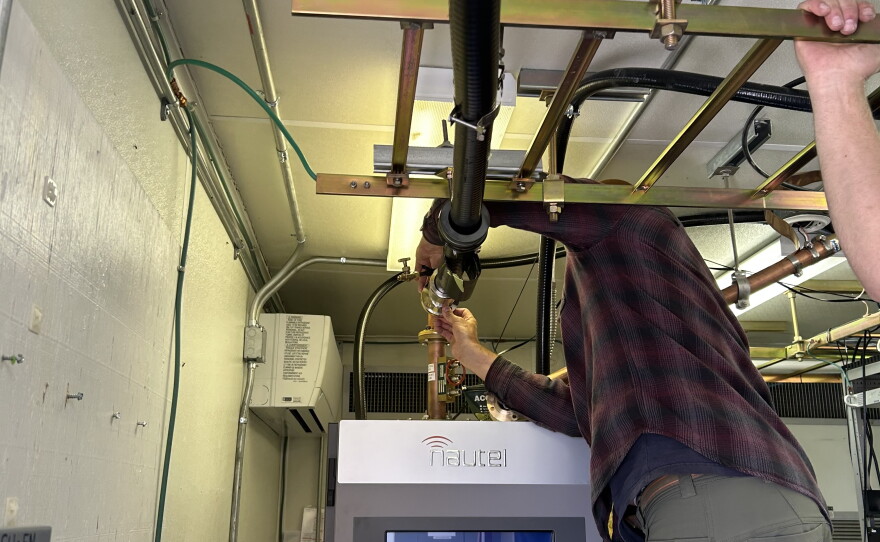
- A temperature-controlled transmitter environment.
- Better remote access, monitoring, and management of KISU-owned tower-site equipment.
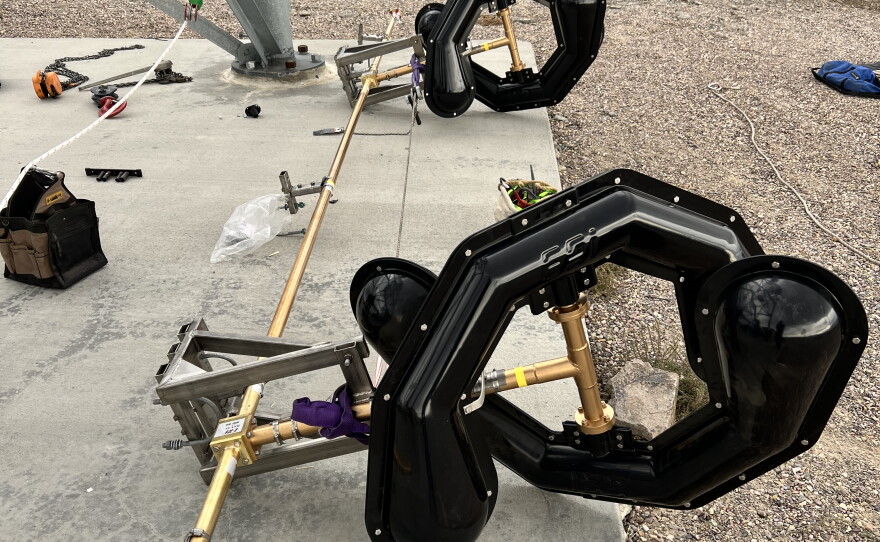
- A new KISU-owned FM antenna, replacing an antenna previously rented from the former tower-site landlord.
- Digital tools that can share program and music information with compatible car stereos.
- Capability for future multi-channel HD Radio expansion.
- Savings under the new 10-year tower-site lease agreement that will help pay for the equipment over the life of the lease.
KISU will continue operating in program-test mode for the next several days while the station files required FCC applications and awaits final approvals.
A multi-year project
The project began with a practical need: KISU’s previous FM transmitter had reached the end of its useful life. By 2020, the station’s approximately 20-year-old transmitter was becoming increasingly difficult to maintain, and replacement parts were no longer available. KISU began setting aside revenue that year to fund a future replacement.
As planning continued, KISU identified additional needs that could not be fully addressed at its former tower location. The station’s tower-site lease is renewed on a 10-year cycle, making 2026 an important opportunity to relocate to a site that could better support KISU’s long-term technical operations.
The new site provides amenities and capabilities that were essential to the project, including:
- Internet service provider connectivity.
- Backup electrical power.
- A climate-controlled environment for transmitter equipment.
- The ability for KISU to install and operate its own FM antenna.
- Improved access to station-owned equipment for maintenance, management, and future upgrades.
KISU began researching a new transmitter system in 2021. In 2023, the station developed a formal plan and timeline for the system replacement and tower-site move. KISU also researched prospective locations and commissioned studies examining tower-site capabilities, available amenities, and signal optimization.
From temporary service to full power
Early in 2026, KISU completed FCC filings for construction permits covering both 91.1 FM and the station’s licensed studio-to-transmitter link between Idaho State University and Howard Mountain. The transition also required Special Temporary Authority, or STA, allowing KISU to continue broadcasting from the new site at reduced power with temporary equipment while the permanent system was completed.
KISU had hoped to begin service from a fully completed new site when its previous lease expired at the end of May. However, equipment-manufacturing delays and limited tower-crew availability extended the project schedule by approximately 15 weeks.
From June 1 through September 26, KISU relied on emergency equipment at the new tower site while the permanent system was installed. That temporary equipment was loaned by National Public Radio, allowing KISU to remain on the air during construction, even at reduced power.
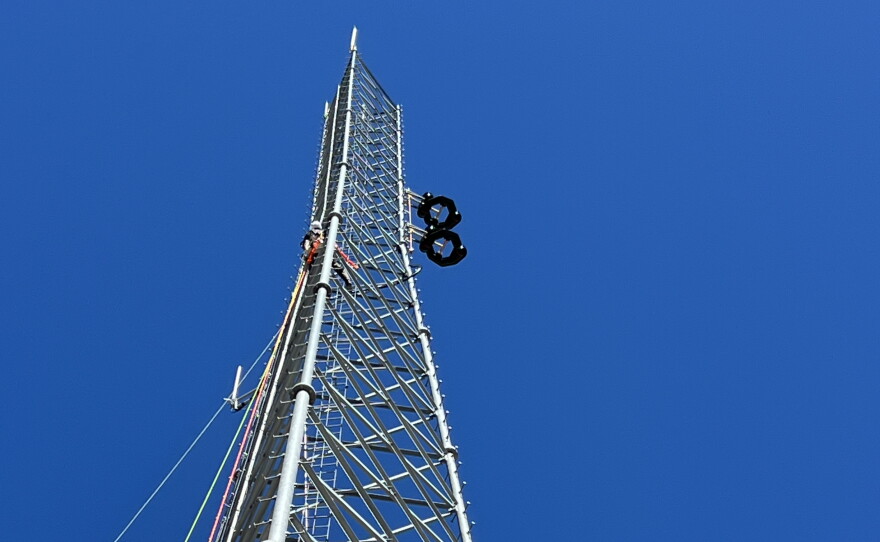
The final phase began September 21 and concluded after several long installation days on Saturday, September 26. The project included installation of the new FM antenna, the studio-to-transmitter-link antenna, and more than 500 feet of coaxial cable.
Thanks to project partners
KISU General Manager Jamon Anderson and KISU engineer Nick Davidson oversaw the installation of the emergency equipment, HVAC system, electrical infrastructure, and new FM transmitter.
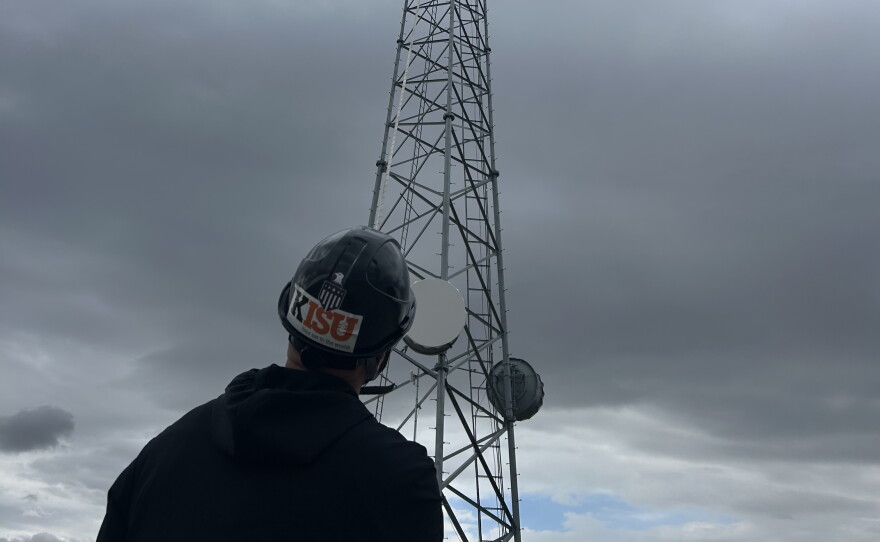
The tower installation work, including the FM antenna, studio-to-transmitter-link antenna, and coaxial cable, was completed by the tower-engineering crew from Boise State Public Radio. KISU is grateful for Boise State Public Radio’s technical expertise and its commitment of staff and resources to help restore full FM service for East Idaho public radio listeners.
KISU extends special thanks to Boise State Public Radio General Manager Tom Michael and engineers Eric Fredricey and Jake Anderson for their assistance with the project.
Listener feedback requested
KISU welcomes listener feedback as final program tests and system adjustments continue. In particular, the station would like to hear from 91.1 FM listeners who are still experiencing reception or signal-quality issues compared with service before the project began June 1.
Send feedback to KISU General Manager Jamon Anderson at JamonAnderson@isu.edu.
Thank you to KISU listeners for your patience during this important upgrade. The completed project strengthens KISU’s FM service today while establishing a more reliable, flexible foundation for the station’s future.