Play Live Radio
Next Up:
0:00
0:00
0:00 0:00
Available On Air Stations
Pocatello weather info
KISU 91.3 FM in Idaho Falls is off the air after its transmitter failed following more than 20 years of service. We’re working to secure a replacement as quickly as possible.
In the meantime, please try tuning to 91.1 FM. Thank you for your patience!

Idaho State of Discovery: How Life Develops with Dr. Heather Ray and Elijah Escobedo

Ways To Subscribe

How can studying frog embryos help researchers understand human developmental disorders? Dean Jim Widmann welcomes developmental biologist Dr. Heather Ray and undergraduate biology student Elijah Escobedo to explore the science of early development, the power of mentorship, and how hands-on research helps students discover their passions.

On this episode of the Idaho State of Discovery Podcast, host Dean Jim Widmann welcomes Dr. Heather Ray, associate professor of developmental biology, and Elijah Escobedo, an undergraduate biology major concentrating in biomedical science, for a conversation about scientific discovery, student research, and the paths that bring people into biology.

Ray shares how a childhood love of nature, experience in wildlife rehabilitation, and curiosity about stem cells eventually led her to developmental biology. She explains how her laboratory uses frog embryos to investigate the genetic foundations of human developmental disorders, particularly those affecting the brain and craniofacial structures. By studying how genetic changes alter the behavior of developing cells, her team builds foundational knowledge that could inform future efforts to prevent or treat these conditions.

Escobedo describes growing up in Twin Falls, where his experiences in agricultural communities and awareness of health disparities among rural Latino populations inspired his goal of practicing family medicine with obstetrics. He discusses his independent honors research on a gene associated with 3MC syndrome and its role in the formation of embryonic tissues. The conversation highlights the opportunities undergraduate students have at ISU to design experiments, lead research projects, present their findings, and work closely with faculty mentors.

Widmann and his guests also explore hands-on learning in developmental biology, Ray’s use of time-lapse microscopy to watch living embryos develop, and Escobedo’s experiences teaching anatomy and physiology labs and helping connect fellow students with research opportunities.
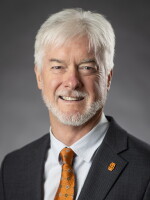
Jim Widmann is the Dean of the College of Science and Engineering at Idaho State University. Before serving as Dean, he was a professor and chair of mechanical engineering at California Polytechnic State University, San Luis Obispo. His interests include mechanical design processes, fluid power control, and engineering education, where he has published numerous papers on student learning and enhancing student success. He is professionally active in the American Society for Engineering Education, where he served as Chair of the Design in Engineering Education Division. For his work, Widmann has earned multiple honors, including the Best Paper and Best Presentation awards from the American Society for Engineering Education, the Cal Poly Learn by Doing Awards for both Teaching and Research, the Society of Women Engineers Most Supportive Professor Award, and was named a Fulbright Scholar at Kathmandu University in Nepal.