


Devastating images have been coming out of Nepal, as a huge flash flood on Wednesday sent a wall of mud and debris through a river system, ripping up buildings, houses and bridges. Hundreds are missing and the death toll continues to rise.
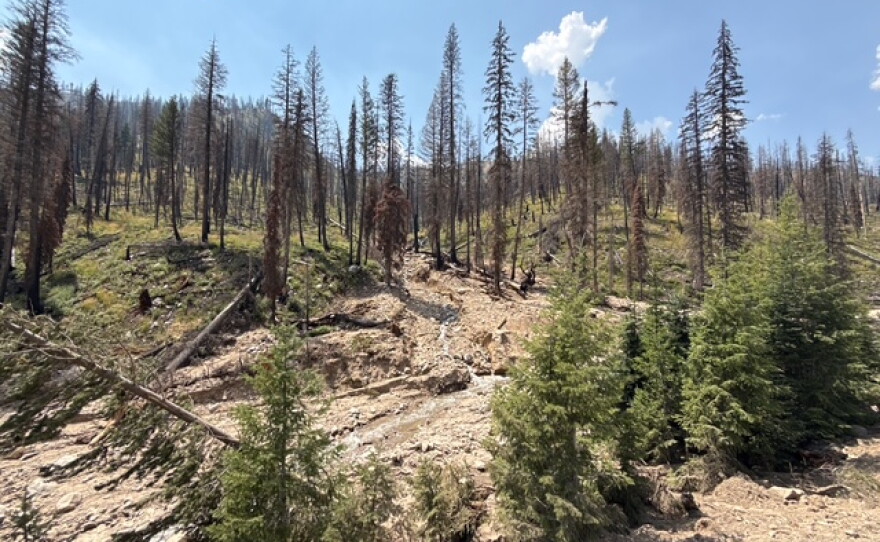
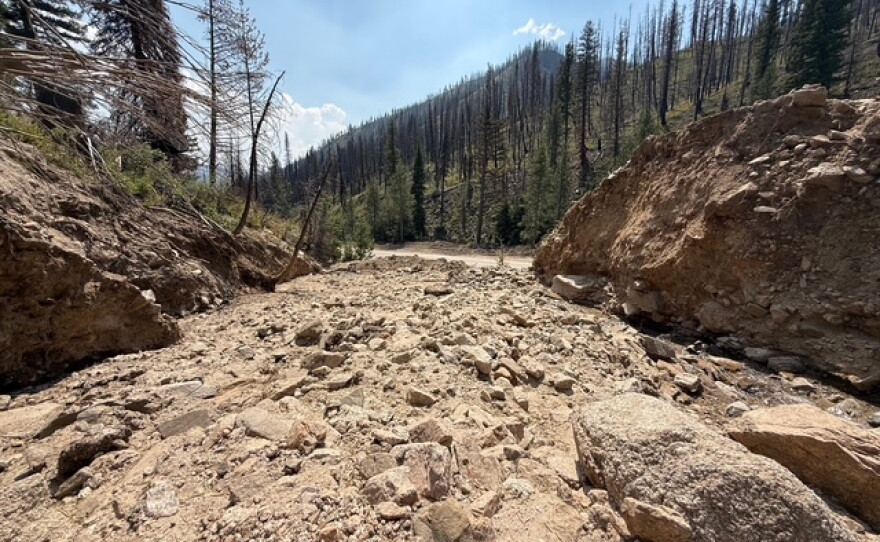
Some of the images are reminiscent of July, when a much smaller flash flood tore through the Grandjean campground, throwing tons of mud and debris through the area and taking out several cars.
Dozens of these floods, known as "debris flows," have hit the area since the 2024 Wapiti Fire burned thousands of acres southwest of Stanley. It’s the same kind of wall of mud and water that flooded basements and roads in Boise as far back as 1959, when rain hit the foothills after a wildfire in the same area where the Claremont Fire burned this year.
Flooding caused by burn scars is a frequent problem after a wildfire, and scientists study it to prevent future loss of life and property.
Dr. Jennifer Pierce is one of those scientists. She’s a professor in the Geosciences Department at Boise State University and the director of the Earth, Wind and Fire Laboratory, and she studies how fires change the landscape. She and Robby Jost, a second-year Master's student in the Geosciences Department, have studied the area around Grandjean. They joined Idaho Matters to talk more.
